
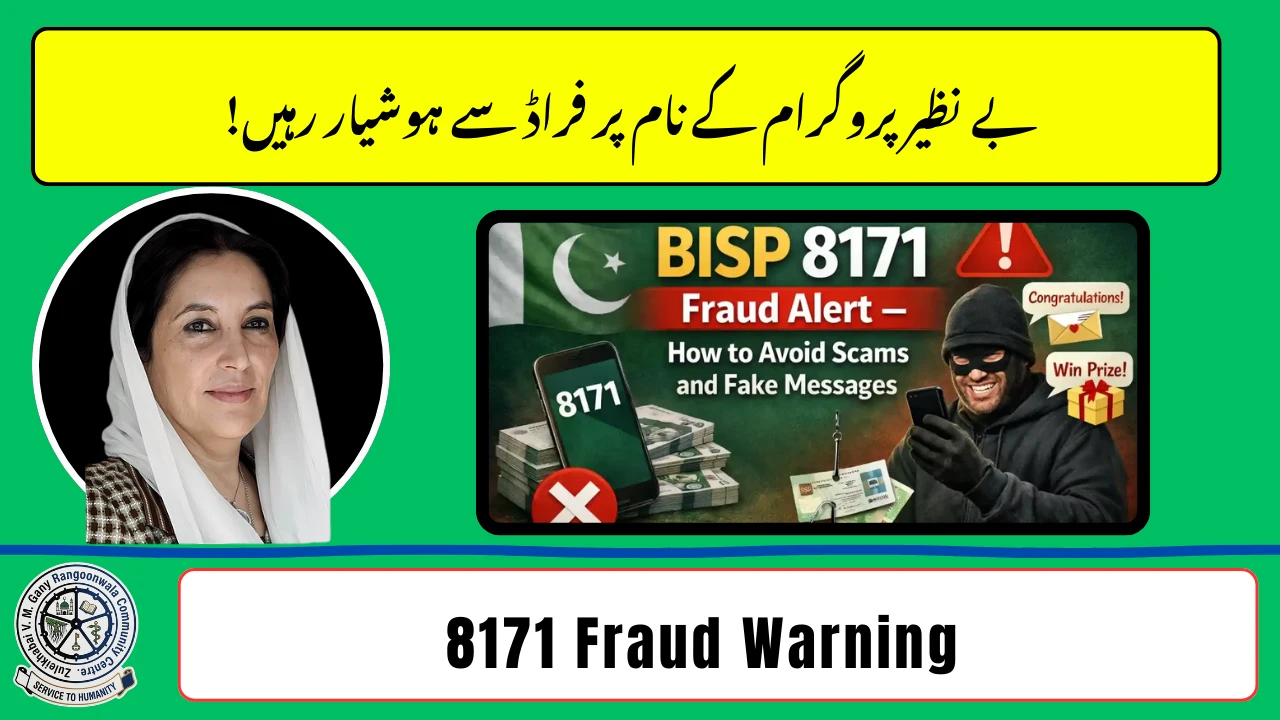
Many Pakistani families rely on the Benazir Income Support Program (BISP) for financial assistance. Unfortunately, scammers often exploit this program to cheat innocent people through fake messages, calls, and agents.
The most common BISP scams involve fake 8171 SMS alerts, illegal registration fees, and fraudulent agents asking for CNIC details or money. These scams target low-income families who urgently need financial support.
Understanding how people scam through BISP is the first step to protecting yourself. Once you know the common tricks used by fraudsters, you can easily avoid losing money or personal information.
Below are the most common methods scammers use and how you can stay safe.
Common Ways People Scam Through BISP
1. Fake 8171 SMS Messages
Scammers send fake SMS messages pretending to be from 8171 saying you are eligible for payments.
They usually ask you to:
- Send your CNIC number
- Pay a verification fee
- Call a fake helpline number
Important: Official BISP messages only come from 8171 and never ask for payment.
2. Fake Registration Agents
Some people claim they can register you in BISP faster if you pay them.
They may say:
- “Pay Rs. 2000 and we will approve your application.”
- “We can add your name to the BISP list.”
This is completely false. BISP registration is always free.
3. CNIC Data Theft
Fraudsters sometimes collect CNIC numbers and fingerprints pretending to verify eligibility.
They later misuse this information to:
- Withdraw payments
- Register fake beneficiaries
- Access financial records
Never share biometric information or CNIC copies with unknown people.
4. Fake BISP Payment Centers
Some scammers set up unofficial payment points and charge service fees.
They may deduct money from your payment saying it is a “processing fee.”
| Scam Type | What Scammers Do | What You Should Do |
|---|---|---|
| Fake SMS | Ask for CNIC or money | Ignore & report |
| Fake Agents | Charge for registration | Never pay |
| Data Theft | Collect biometric data | Only verify at official centers |
| Fake Payment Points | Deduct money | Visit official BISP retailers |

How To Stay Safe From BISP Scams
Follow these simple steps to protect yourself:
- Only trust SMS from 8171
- Never pay money for BISP registration
- Do not share CNIC or fingerprints with strangers
- Visit official BISP offices or partner retailers
- Report suspicious activity immediately
If someone asks for money in the name of BISP, it is almost certainly a scam.
Why BISP Scams Are Increasing
BISP scams are increasing because:
- Millions of Pakistanis depend on welfare programs
- Many people are unaware of official procedures
- Fraudsters target rural and low-income areas
Lack of awareness allows scammers to exploit families who urgently need financial support.

How To Verify Real BISP Information
You can confirm your eligibility through official methods:
- Send your CNIC to 8171
- Check status on the BISP 8171 web portal
- Visit the nearest BISP Tehsil office
Never rely on social media posts or unknown agents.
Conclusion
BISP scams are increasing across Pakistan, but awareness can prevent fraud. Always remember that BISP never asks for money, fees, or personal verification through agents.
If you receive suspicious messages or calls, ignore them and verify your status through 8171 or the official BISP portal.
FAQs
How do scammers cheat people through BISP?
Scammers send fake 8171 messages, ask for registration fees, or pretend to be BISP agents to collect money or personal information.
Does BISP charge registration fees?
No. BISP registration is completely free. Anyone asking for money is a scammer.
Are all 8171 messages real?
Only SMS coming directly from 8171 are official. Messages from other numbers claiming BISP payments are fake.
Can someone withdraw my BISP payment using my CNIC?
Yes, if they gain access to your biometric verification. Never share fingerprints or CNIC copies with strangers.
Where should I report a BISP scam?
You can report fraud at the nearest BISP office or through official BISP helplines.
Can agents add my name to BISP list?
No private agent can add you to BISP. Eligibility is determined through the NSER survey and government verification.