
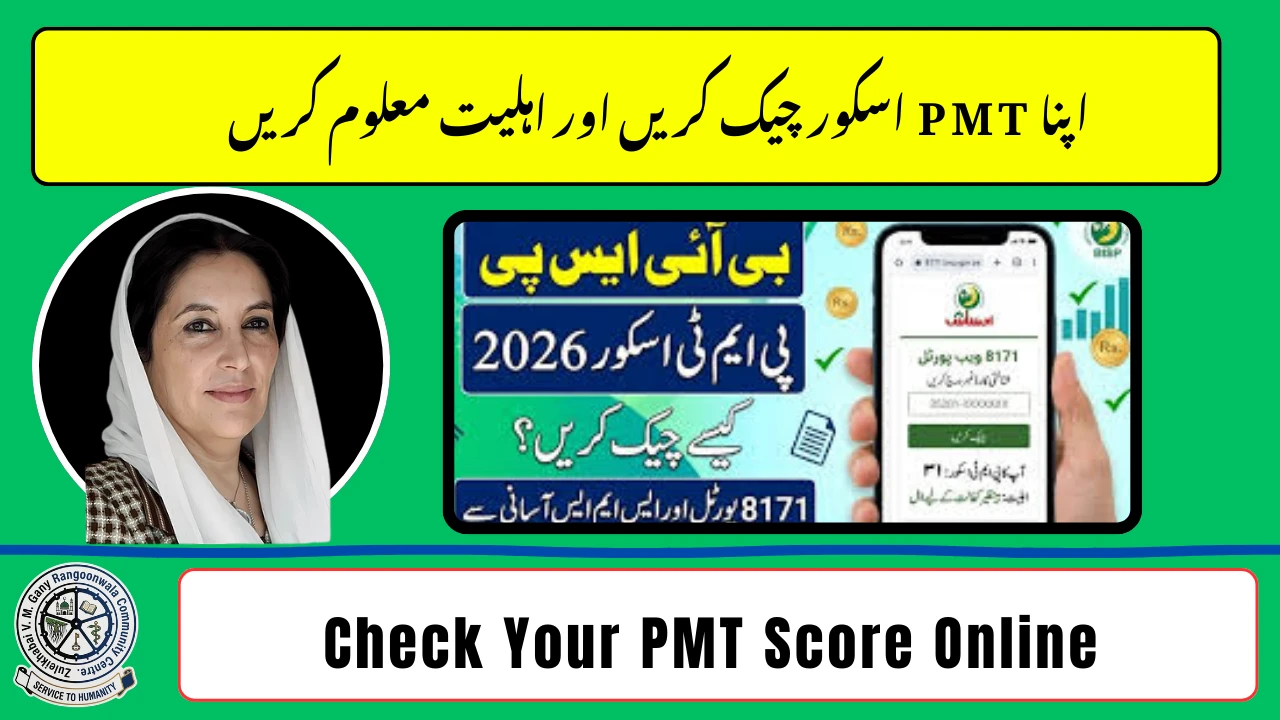
If you want to know whether you qualify for government financial assistance in Pakistan, the fastest way is to check your PMT score online through the 8171 portal using your CNIC. The PMT (Proxy Means Test) score determines eligibility for programs like the Benazir Income Support Programme and Ehsaas Program.
In 2026, the government allows citizens to easily verify their PMT score, eligibility status, and survey record through the 8171 Web Portal Pakistan. This online system checks your data from the National Socio‑Economic Registry (NSER) Pakistan, which evaluates household income, assets, and living conditions.
If your PMT score falls below the required threshold, you may qualify for cash assistance such as Rs. 13,500 under BISP Kafalat or other relief programs.
What is a PMT Score in Pakistan?
A PMT (Proxy Means Test) score is a poverty measurement used by the government to determine if a household qualifies for financial assistance.
It is calculated using data from the NSER survey, including income level, household size, assets, education, and employment.
Lower PMT scores indicate higher poverty levels.
Typical PMT Score Eligibility Range
| PMT Score Range | Eligibility Status |
|---|---|
| 0 – 32 | Eligible for BISP & Ehsaas |
| 33 – 37 | Conditional eligibility |
| Above 37 | Usually not eligible |
How to Check Your PMT Score Online Through 8171 Portal
Follow these steps to verify your PMT score online in Pakistan.
Step-by-Step Guide
- Visit the official 8171 web portal.
- Enter your 13-digit CNIC number.
- Solve the captcha code displayed on the screen.
- Click Check Status.
- Your PMT score and eligibility status will appear instantly.
This process only takes less than one minute and can be done from any mobile or computer.
Why Checking Your PMT Score is Important
Checking your PMT score helps you understand whether you qualify for government assistance programs.
Key benefits include:
- Confirm eligibility for BISP payments
- Verify if your NSER survey data is active
- Know whether you can apply for Ehsaas cash support
- Identify if you need to update your household survey
If your data is outdated, visiting the nearest BISP Tehsil office for a new NSER survey may improve eligibility.

Required Information for PMT Score Verification
You only need basic information to check your PMT score.
| Requirement | Details |
|---|---|
| CNIC Number | Valid 13-digit CNIC |
| Internet Access | Mobile or computer |
| Captcha Code | Security verification |
No documents or registration are required for online checking.

Common Reasons Your PMT Score May Be High
Some households fail eligibility due to a high PMT score. This can happen if:
- Household income increased
- Family owns property or vehicles
- NSER survey data is outdated
- Government records show stable employment
Updating your NSER survey can sometimes correct inaccurate records.
Conclusion
Checking your PMT score online through the 8171 portal is the quickest way to confirm eligibility for government support programs. With just your CNIC number, you can verify your poverty score, survey status, and potential eligibility for financial assistance.
If your status shows not eligible, consider updating your NSER survey at a nearby BISP office to ensure your data reflects your current financial situation.
FAQs
How can I check my PMT score by CNIC in Pakistan?
Visit the 8171 web portal, enter your CNIC number, complete the captcha, and submit. Your PMT score and eligibility status will appear instantly.
What is the PMT score required for BISP in 2026?
Most BISP programs require a PMT score below 32, although some relief programs may allow slightly higher scores.
Is checking PMT score online free?
Yes. Checking your PMT score through the 8171 portal is completely free.
Can I check my PMT score through SMS?
Yes. Send your CNIC number to 8171, and you will receive an eligibility response.
What should I do if my PMT score is incorrect?
Visit the nearest BISP Tehsil Office and request an NSER dynamic survey update.
Does PMT score change over time?
Yes. PMT scores can change after new surveys or updates in household data.